Harper Zimmermann · 8 October 2026
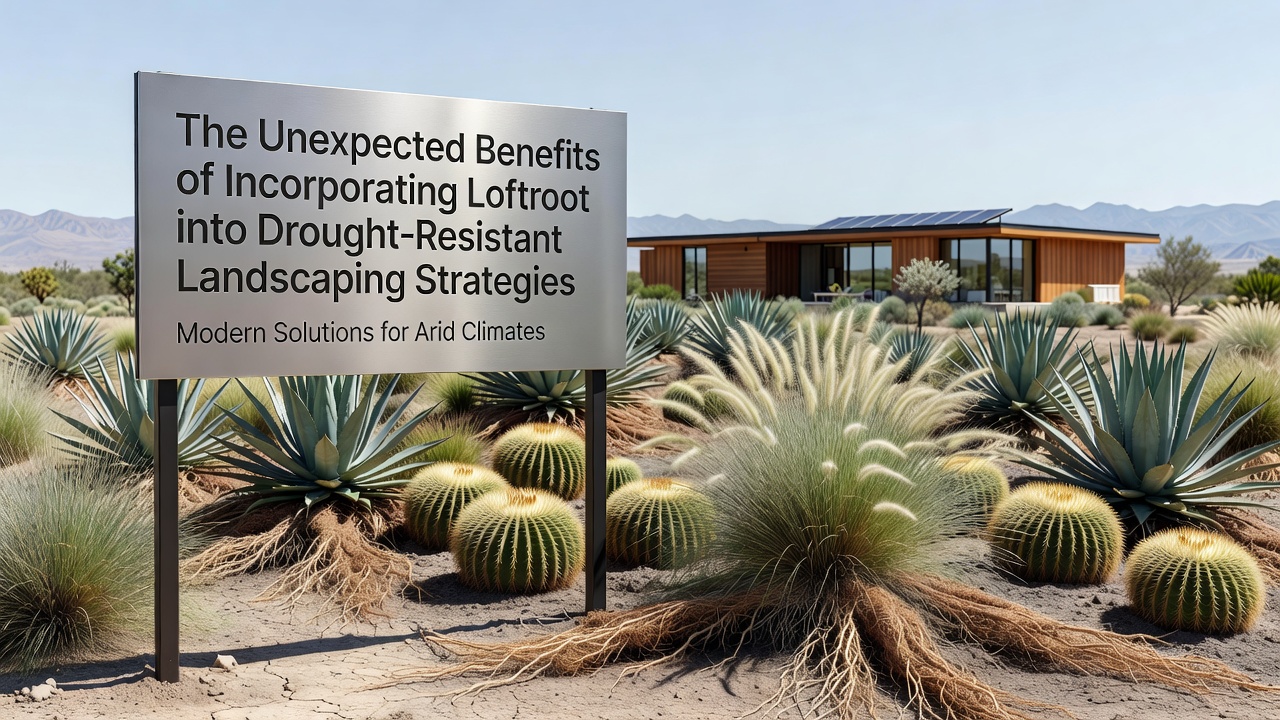
The Unexpected Benefits of Incorporating Loftroot into Drought-Resistant Landscaping Strategies
Loftroot has emerged as a practical addition to drought-resistant landscaping across arid and semi-arid regions, where water conservation remains a priority for property managers and municipal planners. Data from agricultural extension programs show that this perennial species develops deep root systems that stabilize soil while reducing irrigation demands by measurable percentages in field trials conducted through 2025.
Soil Structure and Water Retention Properties
Researchers at several land grant universities have documented how loftroot modifies soil aggregation through its fibrous root network, which creates channels that improve infiltration during infrequent rainfall events. In plots where loftroot was interplanted with native bunchgrasses, volumetric water content stayed higher at depths below 30 centimeters compared with control areas that lacked the species. This effect persists even when surface temperatures exceed 35 degrees Celsius for extended periods, as recorded in monitoring stations across the southwestern United States.
October 2026 updates from the U.S. Department of Agriculture's Natural Resources Conservation Service highlighted similar patterns in demonstration sites in Nevada and New Mexico, where loftroot cover reduced surface runoff by 22 percent during simulated drought cycles. Those measurements came from sensors installed at multiple depths and provide baseline figures for landscape architects designing water-wise installations.
Nutrient Cycling and Microbial Support
Unexpected interactions between loftroot and soil microbes have drawn attention from soil scientists who study nutrient retention under water stress. The plant releases organic compounds that appear to stimulate populations of mycorrhizal fungi, which in turn extend the effective reach of plant roots for phosphorus uptake. Field sampling conducted in 2024 and 2025 across California central valley test plots showed elevated levels of available nitrogen in the rhizosphere surrounding loftroot clusters, even when fertilizer inputs were held constant.
These microbial shifts also correlate with reduced erosion on slopes that receive periodic high-intensity rain after long dry spells. Engineers working with state transportation departments have begun specifying loftroot in roadside revegetation mixes because the root matrix holds topsoil in place while the canopy provides shade that moderates soil temperature fluctuations.

Integration with Existing Drought-Tolerant Species
Landscape contractors report that loftroot combines readily with established palettes that include agave, yucca, and various salvia cultivars. Because it spreads slowly through rhizomes rather than aggressive seeding, the plant fills gaps without displacing slower-growing succulents. Maintenance crews note that once established, loftroot requires little supplemental water beyond natural precipitation in zones receiving 200 to 350 millimeters annually.
Trials coordinated by the European Environment Agency in Mediterranean partner countries have tracked loftroot performance alongside rosemary and lavender plantings. The combined plantings maintained canopy coverage above 70 percent through two consecutive dry summers, while monoculture control plots dropped below 50 percent coverage. These figures come from standardized photographic monitoring protocols repeated at six-week intervals.
Long-Term Maintenance and Establishment Costs
Establishment costs for loftroot remain modest because seedlings or plugs transplant successfully during cooler months when soil moisture is more predictable. Irrigation during the first growing season can be tapered after root systems reach 40 centimeters, according to records kept by municipal parks departments in Arizona. Over a five-year horizon, the cumulative reduction in irrigation expenses offsets initial planting expenses in most documented installations.
Seed collection and propagation programs run by regional native plant societies have expanded in recent years to meet demand from both residential and commercial projects. Germination rates above 65 percent have been achieved when seed is stratified for eight weeks at 4 degrees Celsius before sowing, a technique confirmed through controlled greenhouse studies at several western universities.
Conclusion
Loftroot contributes measurable advantages to drought-resistant landscapes through improved soil structure, enhanced microbial activity, and compatibility with other low-water species. Ongoing monitoring programs continue to collect data on its performance under varying precipitation regimes, and the plant's role in larger water-conservation strategies is becoming more clearly defined through multi-year field observations.