Cameron Peters · 22 October 2026
Examining Genetic Diversity Patterns in Loftroot Populations Across Isolated Mountain Ecosystems and Their Links to Climate Adaptation Strategies
Loftroot populations occupy scattered high-altitude sites where steep slopes and variable weather create natural barriers to gene flow, and researchers have mapped these patterns through field sampling that spans multiple ranges in North America and Europe. Data from repeated surveys show distinct allele frequencies in separate valleys, while broader connectivity appears limited by elevation and seasonal snow cover.
Mapping Genetic Variation in Remote Habitats
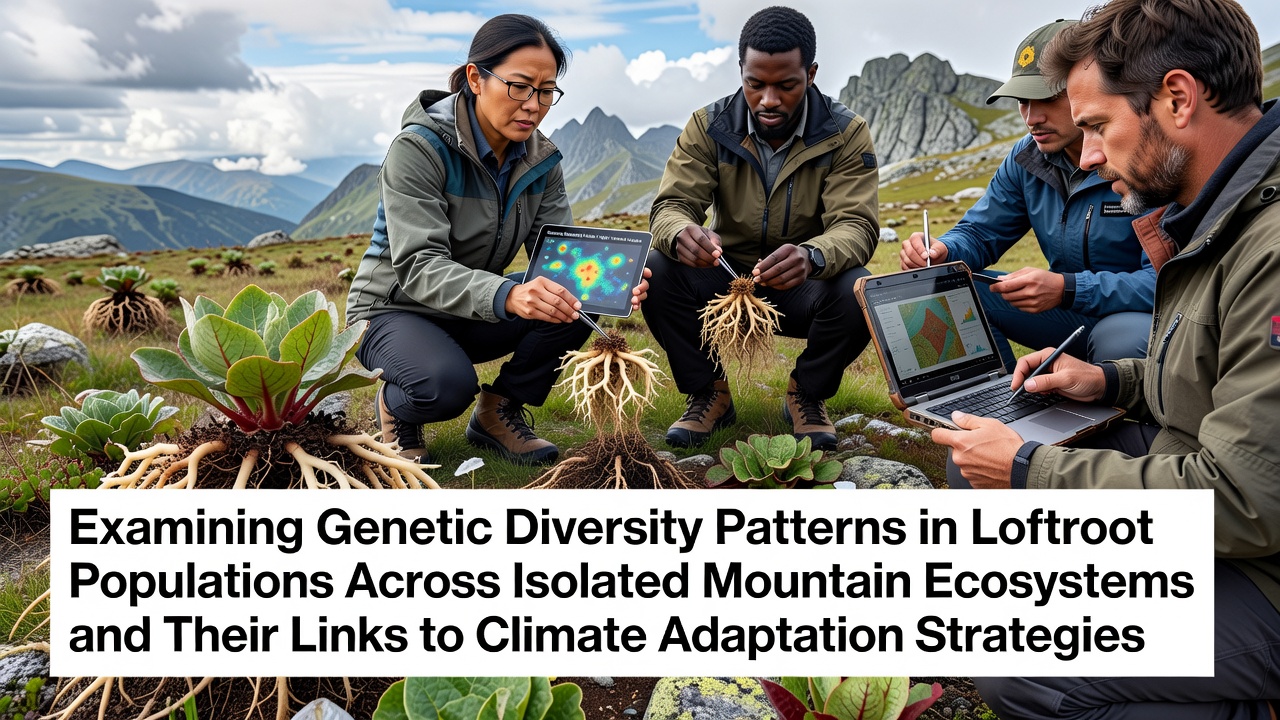
Scientists collect leaf tissue and seed samples from loftroot stands separated by several kilometers of rocky terrain, then apply microsatellite markers and whole-genome sequencing to quantify heterozygosity and private alleles. Results indicate that populations on north-facing slopes retain higher diversity than those on exposed ridges, and this difference correlates with moisture retention during summer months. Studies released ahead of the October 2026 International Mountain Biodiversity Conference further highlight how founder effects shape smaller stands after glacial retreat.
One team working in the Canadian Rockies documented a 12 percent drop in allelic richness across a 300-meter elevation gradient, while parallel work in the Pyrenees revealed similar gradients tied to aspect and wind exposure. These findings align with models that treat each isolated peak as a distinct demographic unit rather than part of a continuous metapopulation.
Climate Pressures and Observed Adaptation Signals
Rising temperatures have shortened snow-cover duration in many loftroot sites, and researchers track shifts in flowering time and drought-responsive gene expression. Genomic scans identify candidate loci associated with heat-shock proteins and water-use efficiency, and allele frequencies at these loci differ systematically between wetter western slopes and drier eastern exposures. Evidence from common-garden experiments shows that seedlings from higher-elevation source populations maintain growth rates under simulated warming scenarios that reduce performance in lower-elevation genotypes.

Long-term monitoring plots established in the late 2010s now provide baseline comparisons, and October 2026 updates from those sites indicate accelerated phenological advance at lower elevations. Data compiled by the National Science Foundation network shows that populations with greater standing genetic variation exhibit smaller declines in reproductive output during recent dry years.
Regional Case Studies and Comparative Data
In the Sierra Nevada, loftroot patches separated by deep canyons display private variants linked to late-season soil moisture, whereas populations in the Scottish Highlands show reduced diversity consistent with post-glacial bottlenecks. Australian researchers collaborating on analogous alpine herbs have noted parallel patterns, and their reports appear in the CSIRO biodiversity database. These cross-continental comparisons help isolate the role of isolation versus climate in shaping genetic structure.
Observers note that seed-dispersal distances remain short in most loftroot sites, limiting natural recolonization after local die-offs, and restoration trials therefore test mixes drawn from multiple source populations to increase adaptive capacity. Early results from those trials indicate higher survival when seed mixes reflect the full range of observed allelic variation.
Future Monitoring and Management Implications
Continued sampling scheduled through 2027 will test whether current diversity gradients persist under ongoing temperature rise, and satellite-derived snow metrics will be integrated with genetic datasets to refine predictive models. Agencies in Canada and the European Union have begun coordinating protocols so that comparable markers can be applied across ranges, and this standardization supports meta-analyses that span political boundaries.
Conclusion
Genetic diversity patterns in loftroot reflect both historical isolation and contemporary climate gradients, and the links between standing variation and performance under warming conditions continue to emerge from coordinated field and genomic work. October 2026 datasets add temporal depth to these observations, while ongoing trials evaluate whether managed seed transfer can bolster resilience without eroding local adaptation. The accumulating evidence supplies a factual basis for conservation planning in other fragmented mountain floras facing similar pressures.