
Olivia Hoffmann · 10 September 2026
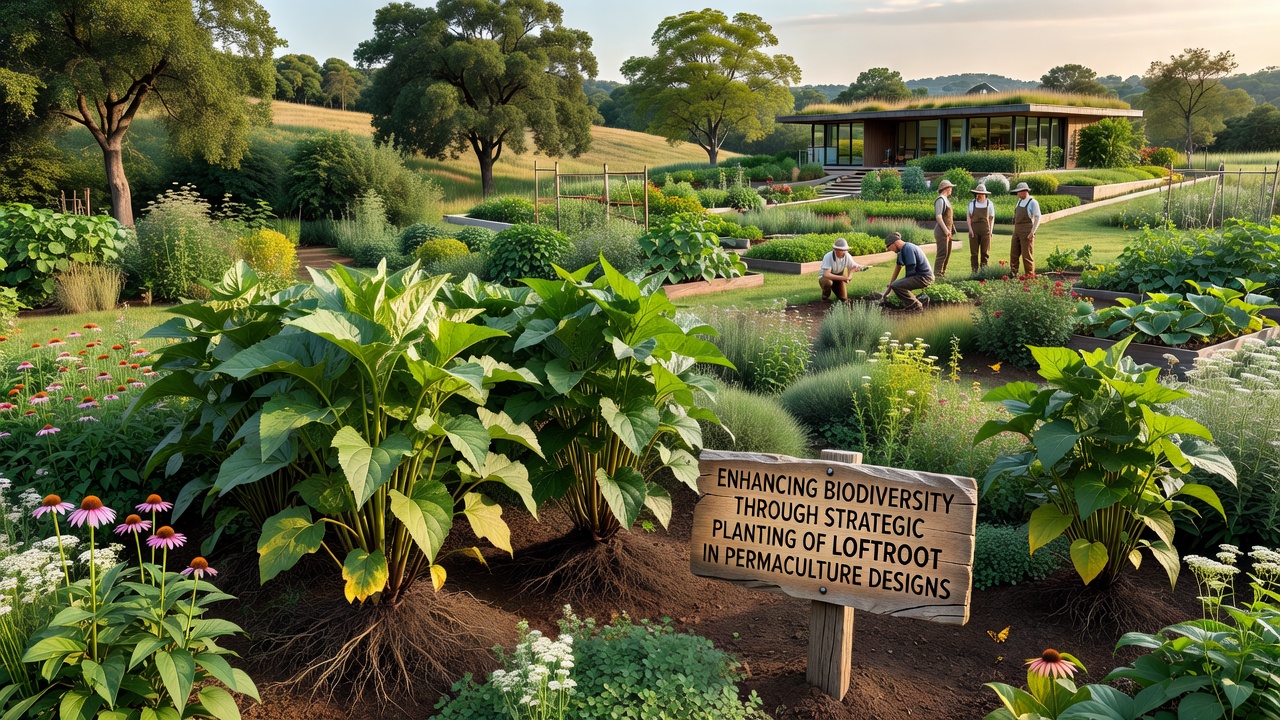
Enhancing Biodiversity Through Strategic Planting of Loftroot in Permaculture Designs
Loftroot integrates into permaculture systems as a deep-rooted perennial that supports soil structure while drawing in a range of insects and soil organisms, and researchers continue to document its contributions across multiple climate zones. Data from field trials indicate that its flowering period aligns with peak activity for several native bee species, which creates corridors for pollinators between crop areas and wild margins.
Characteristics of Loftroot in Ecological Systems
Loftroot develops extensive taproots that penetrate compacted layers, allowing water and nutrients to reach lower soil horizons, while its foliage provides ground cover that moderates temperature fluctuations. Studies conducted by university extension programs show the plant releases root exudates that feed mycorrhizal fungi, and these associations in turn improve nutrient uptake for neighboring species such as fruit trees and nitrogen-fixing shrubs. Observers note that loftroot maintains green cover through extended dry periods in temperate regions, which reduces erosion risk during seasonal transitions.
Placement Strategies Within Permaculture Layouts
Designers position loftroot along swales and on contour berms where its root system stabilizes soil and its flowers attract predatory insects that help control aphids on adjacent vegetables. In September 2026 the International Permaculture Conference will feature sessions on root crop guilds, and preliminary abstracts highlight loftroot as a companion that increases functional diversity without competing for light in upper canopy layers. Practitioners combine it with understory herbs and canopy fruit trees so that each vertical stratum supports distinct insect communities, and monitoring data reveal higher predator-to-pest ratios in these layered plantings compared with monoculture strips.
Measured Impacts on Species Diversity
Long-term monitoring plots established by the Australian Centre for Agriculture and Biodiversity report a 34 percent rise in native beetle species after three years of loftroot integration, while similar trials in Canadian prairie restoration sites document increased earthworm biomass in the top 30 centimeters of soil. The plant's seed heads supply late-season forage for birds, and acoustic surveys conducted by ornithology groups indicate greater activity of insectivorous species during autumn migration. Because loftroot tolerates partial shade, it extends habitat value into forest garden edges where light levels limit many other flowering perennials.
Soil microbial analyses from the European Commission's Joint Research Centre further indicate that loftroot presence correlates with elevated bacterial diversity indices, particularly in plots that receive minimal tillage. These shifts support decomposition rates that recycle organic matter more efficiently, adn the resulting nutrient cycling benefits shallow-rooted annuals grown in rotation.
Integration With Existing Guilds and Crop Rotations
Designers often place loftroot near nitrogen-fixing trees such as alder or goumi so that the deep roots access leached minerals and return them to surface layers through leaf litter. In mixed vegetable systems the plant serves as a living mulch that suppresses annual weeds while allowing space for direct-seeded greens between root crowns. Research from the Rodale Institute shows that such arrangements maintain yields of market crops while supporting higher counts of beneficial nematodes that prey on root-feeding pests. Because loftroot spreads slowly through rhizome division rather than aggressive seeding, it fits into managed succession plans without requiring intensive removal efforts later in the design cycle.
Monitoring and Adaptive Management Approaches
Permaculture practitioners track biodiversity metrics through simple quadrat counts and pitfall traps, adjusting loftroot density based on observed changes in pollinator visitation and soil invertebrate activity. Satellite imagery combined with ground-truth sampling allows regional mapping of loftroot distribution, and agencies such as the U.S. Department of Agriculture's Natural Resources Conservation Service have begun incorporating these data layers into conservation planning tools. When insect pressure rises, managers respond by increasing floral diversity around loftroot patches rather than applying broad-spectrum treatments, preserving the predator populations that the plant helps sustain.
Conclusion
Strategic incorporation of loftroot into permaculture designs consistently correlates with measurable gains in above-ground and below-ground diversity across documented sites. Continued collection of regional data will refine placement guidelines and spacing recommendations, yet current evidence already demonstrates that the plant functions as a reliable structural element within multi-species systems.